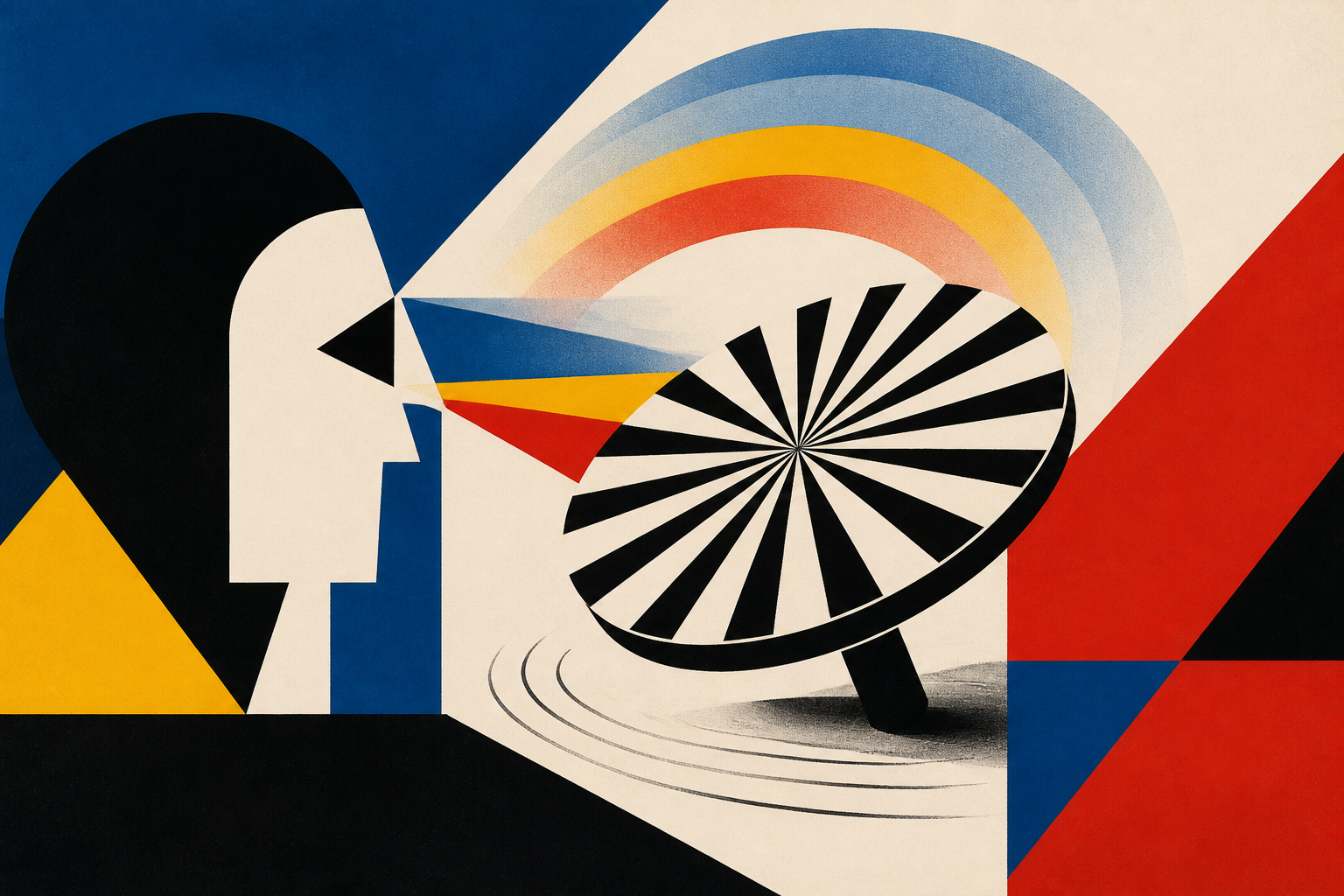
A research team led by Japan's National Institute for Basic Biology (NIBB) has used an artificial neural network to produce strong evidence for how the brain generates the illusory colors seen when spinning a black-and-white disk, a puzzle that has intrigued scientists for nearly two centuries. The findings, published June 16, 2026 in *Scientific Reports*, suggest that predictive processing in the brain—not just the retina—plays a central role in the phenomenon known as Benham's top.
Continue reading
The rest of this article is for AI News Blitz readers. Choose an option below to keep reading.
Already purchased? Sign in✓ Signed in — this article isn’t included in your current plan.
Unlocking the full article...
Contact us
Questions, corrections, or ideas? Send us a message here. We aim to reply by email within 24 hours.
Thank you. Your message has been sent. We aim to reply by email within 24 hours.Please enter your email address and a message.We could not send your message. Please try again in a little while.